 Carenika
Built inside the system it was built for.
Carenika was not designed in a boardroom and handed to doctors. It was written over four years by one developer working every day alongside physicians in Bangladesh’s postgraduate medical system.
Why it exists
A physician in Bangladesh sees fifty or sixty patients in an evening. The consultation happens in Bengali. The record has to be in English. So the record either does not get written, or it gets written badly, hours later, from memory.
The next doctor that patient sees starts from nothing. Tests get repeated. Failed treatments get tried again. And the prescription itself carries no automatic check — no interaction warning, no renal dose adjustment, nothing between a tired hand at 11pm and the patient.
Ambient clinical AI solved the first half of this problem years ago in the United States and Europe. It was never built for Bengali, and it was never built with a drug-safety layer attached. That gap is the whole reason Carenika exists.
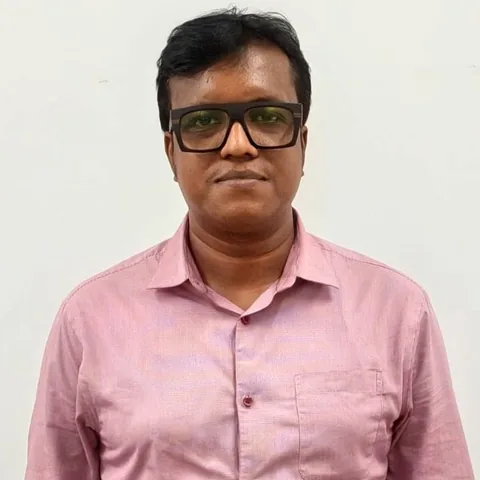
The founder
Pranab Bandhu Nath — founder and lead developer. Twenty years in software engineering, IT consulting and university teaching across Bangladesh, the United Kingdom and Singapore, and IT consultant to a national postgraduate medical institution. He built the speech pipeline, the clinical structuring layer, the safety rule engine and the application itself.
The company
Carenika is a product of Vita Flow Technology, a Dhaka-based software company working at the intersection of healthcare, education and applied AI. It has taken no outside investment.
In the press
Prothom Alo, Bangladesh’s largest national daily, published a feature on Carenika in its technology section on 23 August 2026. Read the report (in Bengali)
Bengali first — because that was the gap we understood.
Nothing in Carenika’s core is tied to one language. Speech understanding, clinical structuring and the safety rule engine are language-independent by design; the engine works on drugs and conditions, not on words. The same platform can be adapted to other languages that global health-tech has passed over — and that is the direction we are building in.
Technology that works in Bengali can work in any language the global market ignores.
Talk to the person who built it.
Partnerships, institutional deployment, research collaboration or press — it comes to the founder directly.
Get in touch